A personal story about what happened when water got into our home, and the steps I'd take if it happened to you.
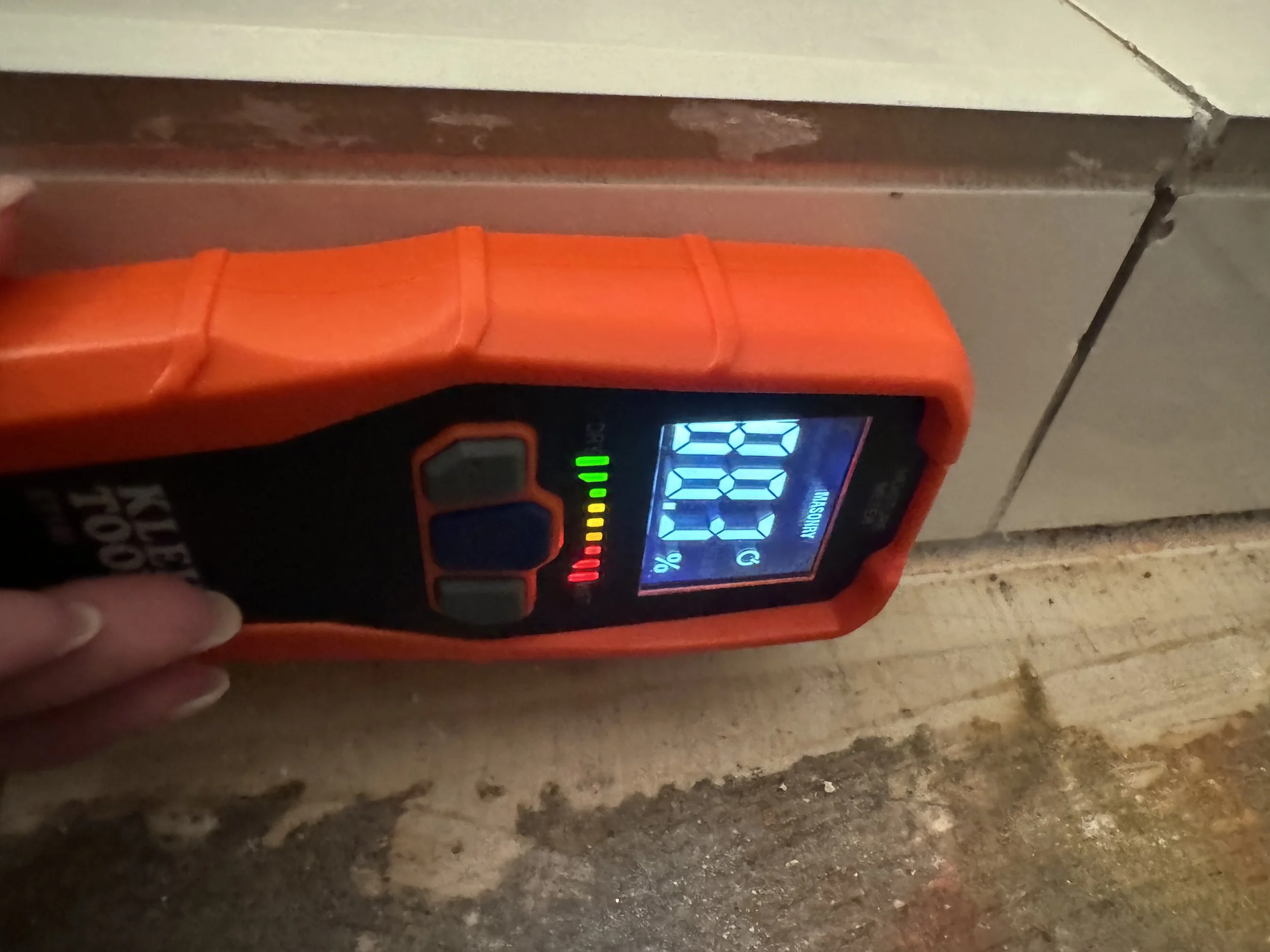
If you're a Scottsdale homeowner and you've just found water where it shouldn't be, here's the story of how I learned to handle it, and what I'd do differently if it happened again.
When Jeff and I first moved to Arizona, we'd been living on the road for a while, in a fifth wheel, traveling the country. When we found this house, it felt like the opposite of that. Beautifully renovated. Amazing closets. A kitchen I loved. A pool that felt like the most relaxing spot in the world. It checked every box, and after months on the road, I was thrilled.
Within five days, something in me changed. My stomach was off. My mood tanked in a way I didn't recognize. I called a friend of mine who's a doctor, knowledgeable in functional health, and told her something felt wrong. I said, I'm not a depressed person. I'm actually strangely positive even when bad things happen. And my mood is the worst it's ever been, and I don't know why.
She asked one question before anything else: had anything in my environment changed recently. When I told her we'd just moved, she wanted me to get labs done right away to see if something about my biology had shifted along with it.
I didn't want to believe any of it had to do with the house. I loved this house. But the timing was too exact to ignore.
So we brought in testers, flown in from California, half hoping they'd tell me I was imagining it. They didn't find anything conclusive. What they did tell us was to get an infrared camera and check the walls before monsoon season, then check again after.
After that first monsoon, we found eleven leaks throughout the house. Every single one was invisible from the outside. The largest was directly over the bed where I slept every night.
That's the moment Mastercraft Expert Roofing was really born.
I want to be clear about something. This is just my experience. I'm not sharing it to scare you, and the fact that it happened to me doesn't mean it'll happen to you. Before I went through it, I never would have connected any of these dots myself. I'm not a doctor, and I'm not trying to diagnose anyone's stomach issues or bad mood based on my own story. What I do want is for people to have a level of awareness that most homeowners don't get until something like this happens to them. Water damage in a home isn't something to just live with. If something gets wet and stays wet, it may need to be replaced, and yes, that can be a real expense. But it's a smaller cost than feeling unwell in your own home and not knowing why.
One more thing worth saying plainly: we don't do remediation work, and we don't make a dollar off any of the advice in this post. I'm telling you this because it happened to me, not because it benefits us in any way.
What I Learned About Testing Too Soon
One of the things I learned the hard way is that testing right after a leak usually doesn't tell you much. Testing looks for what's already there, and if the water just showed up, there hasn't been time for anything to develop yet. In our case, I would have saved myself money and stress by putting that energy into drying the area out and fixing the source of the water first, instead.
Even later on, once some time had passed, I learned to be cautious about relying on air testing by itself. It's a useful piece of the picture, but on its own it's known to give false negatives, meaning it can come back clean even when there's a real issue in the walls or under flooring. That was actually part of our own experience. Water that sits for a while can fall into what the restoration industry calls Category 3, water contaminated enough to carry things like gram-negative bacteria, and air testing alone often won't catch that. We'll have a full post coming soon walking through the different kinds of testing and what each one is actually good for. For now, what I'd want someone else to know is simply this: a clean air test doesn't automatically mean mold or contamination isn't present.
What Worked, and Didn't, With Fans
In the situations I've dealt with, when the leak was caught within the first day or so, before it had real time to sit, fans pointed at the wet area genuinely helped. Moving air speeds up evaporation, and the faster the space dries, the less time anything has to take hold. Running them continuously, not on and off, and pairing them with an open window or door to actually move the moist air out rather than just circulating it, made the biggest difference for us.
Where I learned to change my approach was water that had already been sitting for a while, especially with drywall, carpet, or wood involved. That's when I found fans could do more harm than good. Instead of just drying the surface, they can aerosolize whatever has started growing and spread it through the rest of the home, which is exactly what happened in a situation I dealt with, and it's especially worth avoiding if anyone in the house has allergies, asthma, or the kind of sensitivity I have.
If the area has already been wet for a while, I stopped using fans on it. Moving air across water damage that's had time to sit pushed contaminants around our home instead of drying them out safely. A moisture meter turned out to be one of the most useful, inexpensive tools I own, and it's why I keep one in the house at all times.
What I've Learned to Look For With Drywall
The signs I've learned to watch for are drywall that feels soft or spongy when you press it, has started to bulge or bow, or where the paint has gone dark or discolored. In our experience, any of those meant it was done. It's one of the least expensive building materials in a home, and trying to dry it in place and save it never worked out the way we hoped. What I learned from the professionals we worked with is that they typically cut it out well above the visible waterline, often a foot or more higher than where the damage stops, because water travels up through drywall further than it looks like it has.
What I'd tell a friend is that once it's been wet for any real length of time, this isn't something to take on yourself. Cutting into contaminated drywall can release whatever's built up inside it into the air you're breathing. That's exactly why we brought in someone who knew how to contain the area first and remove it in a way that kept it from spreading into the rest of our home.
What Worked for Us With Dehumidifiers
We got dehumidifiers running in the space as soon as we could, and kept them running around the clock, not just during the day. What we learned to aim for was getting the humidity in that room down under 50 percent, ideally closer to 40, and a basic hygrometer told us exactly where we stood for about the same price as a nice dinner out. One consumer-grade unit was enough for a single room in our case. Beyond that, we found it made more sense to bring in a professional with commercial-grade equipment than to run several small units and hope for the best.
What I took away from that experience is that dehumidifiers do more than just speed up drying time. Pulling moisture out of the air quickly limits how much time any contaminants have to establish themselves in the first place. The faster the environment stopped being wet, the fewer problems we ended up dealing with later.
Why We Sealed the Area Off
Because we didn't catch our leak right away, meaning it had time to sit before we found it, we learned it was worth sealing the space off rather than leaving the door open while figuring out next steps. The professional we worked with hung plastic sheeting across the doorways and set up a negative air machine, which pulls air out of the contained space through a HEPA filter rather than letting it drift out into the rest of the house. It looked a little dramatic the first time we saw it set up, but I came to understand it's a standard, well-established step, not an overreaction.
What I Wish I'd Known About the HVAC System
Looking back, if ductwork runs anywhere near the affected area, sealing off the supply and return vents in that room with plastic sheeting and tape, and turning the system off until the area is dry, is something I'd do without hesitation now. Your HVAC system is built to move air efficiently through your entire home, which is exactly what you don't want if there's any chance of contamination. A return vent pulling air from a wet, contaminated room can distribute the problem to every other room the system serves, and that's not a mistake I'd want anyone else to make unknowingly.
Drying Out Isn't the Same as Solved
This is the part I most want to share, because it's the part that surprised me the most. It's easy to assume that once a wall looks and feels dry, the issue is behind you. In our case, that wasn't true. Once water damage has occurred, drying the surface doesn't undo what may have already started inside the material. What surprised me even more is that this isn't always something you can see. Mold and contamination often don't show up looking the way people expect from photos. Sometimes materials look almost fine, maybe a little dusty or slightly discolored, and there's still a real problem underneath. And if you can actually see visible growth, that usually means it's had a good amount of time to develop already. I learned that firsthand, and I'm sharing it not to scare anyone, but because I wish someone had told me before I had to find out on my own.
0 to 24 hours: Materials are wet, but there's nothing visible yet. This is the window where drying makes the biggest difference.
24 to 48 hours: The EPA advises that if materials haven't been thoroughly dried by this point, it's reasonable to assume mold growth has started. At this stage, it's still microscopic and won't be visible to the eye.
About a week: If the area has stayed wet, colonies can become visible to the naked eye.
Source: U.S. Environmental Protection Agency, epa.gov/mold
What Water Damage Taught Me
The way I've come to think about it, after going through this myself, is that water damage behaves a lot like an infection. Caught early, it was manageable and pretty straightforward to resolve. Left alone, it spread, and what would have been a simple fix became a much bigger, more expensive, more disruptive one. For us, acting quickly wasn't about panic. It was about giving ourselves the easiest version of a problem that was already happening either way.
Fix the Source, Not Just the Symptom
One thing that became clear through our experience is that drying out the interior is only half the job. There's no point fixing the inside of a home if the water is still finding its way in from the outside. In our situation, the source was the roof, and that had to get resolved too, or we'd have been back here again after the next storm. This is where Jeff comes in. Interior remediation and roofing are two different jobs, done by two different kinds of people, but in our experience, they only worked when they happened together.
Who I'd Call
Looking back, who we called mattered as much as anything on this list. We wanted people who were calm and straightforward, who explained what they were doing and why, not anyone who led with worst-case scenarios or tried to sell us on something before they'd even assessed the damage. For us, that ended up being two calls, one for the inside and one for the outside, and I'd make both sooner rather than later if I were in that spot again.
We personally recommend Leonard Brabson at All Dry Services of Phoenix & East Valley. He's calm, thorough, and not the type to make you feel panicked into a decision. He'll walk the space with you, explain exactly what he's seeing, and give you a clear plan before any work starts. You can reach him directly at (480) 561-5020. We don't receive anything for this recommendation. We just think he's genuinely good at what he does.
And then there's Jeff. If the water's coming in from your roof, that's exactly the kind of problem he genuinely loves getting his hands on. He's not going to make you feel silly for not knowing what's wrong, and he's not going to try to sell you something you don't need. He just wants to figure out what happened and make sure it doesn't happen again. If you're not sure whether your roof is even the source, that's alright too. That's what the inspection is for. Give him a call and he'll help you get to the bottom of it.
None of this is about fear. Your roof is your home's first line of defense, and if it's already let water in, that doesn't mean disaster. It means you have a decision to make, and I want you to make it with real information. That's all this is.
Frequently Asked Questions
Should I test for mold or contaminants right after a leak?
In our experience, testing that early usually didn't tell us much. Right after water gets in, there typically hasn't been enough time for anything to develop, so early testing often comes back inconclusive even when there's a real problem underway. We found it more useful once some time had passed.
Can I just let a wet area air dry and move on?
That was our first instinct too, but what we learned is that a dry surface doesn't guarantee the issue underneath is resolved. Once materials have been wet, what happens inside them isn't always visible from the outside, even once you've opened the area up. If you can actually see mold or staining, that usually means the problem has already had real time to develop. But the materials can also look mostly fine, maybe a little dusty or lightly discolored, and still have an issue underneath. It doesn't always show up the way people expect from photos online.
Do I really need to worry about my HVAC system?
If ductwork is near the affected area, this is something we'd take seriously based on what we went through. HVAC systems are designed to move air efficiently through your whole home, which means they can also move contaminants well beyond the original leak if the ducts aren't sealed off first.
Worried About Your Roof?
If water is getting into your home, it's worth knowing whether your roof is the source. We'll give you an honest, no-pressure inspection so you know exactly where things stand.
Book Your Free Inspection