What monsoon season actually does to a Scottsdale roof — and why the damage is often hiding where you cannot see it.
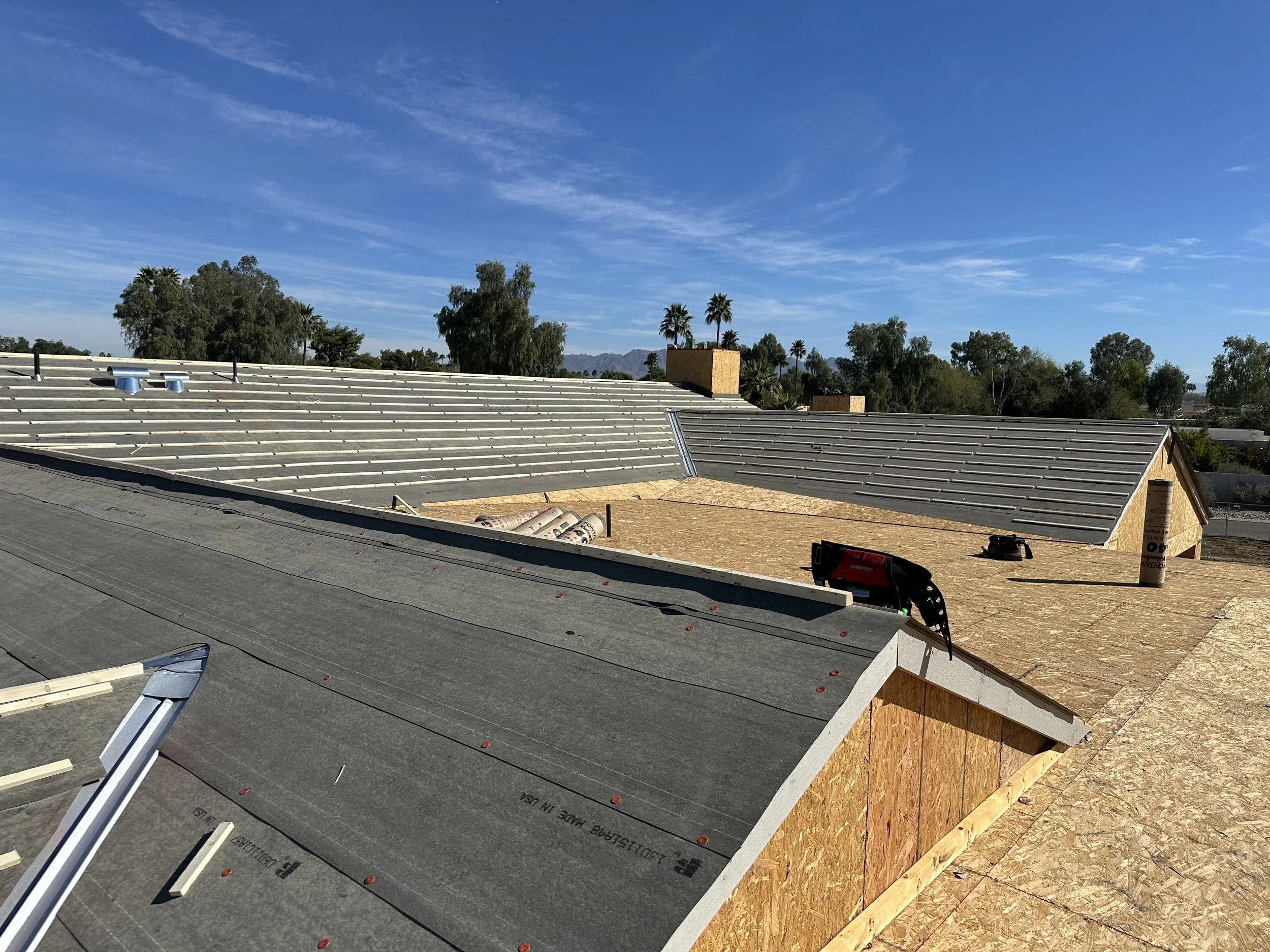
The first monsoon we experienced after moving to Arizona was something else. We already had a feeling the house we were renting might have some roof issues. Nothing we could point to exactly. Just a sense.
After the storm rolled through, we pulled out an infrared camera and started looking around. What we found stopped us cold.
The guest bedroom wall had taken on water. Completely invisible to the naked eye. Nothing you would ever notice walking through that room. In the master bedroom ceiling, there was a massive wet spot sitting directly above us. Water had worked its way in through the chimney and had been building there quietly. And those were not the only spots. The house had leaks throughout.
The worst part was that none of this was new. This damage had been accumulating through previous monsoons, quietly working through the roof system long before we ever moved in. The renovation had hidden all of it behind fresh finishes. It was already a serious problem. We just did not know it yet.
That experience is a big part of why Mastercraft exists.
What Monsoons Actually Do That Regular Rain Does Not
Most people think about rain as falling straight down. Monsoons do not work that way.
When a monsoon hits Scottsdale, you are dealing with wind driven rain that comes at your roof from multiple angles at once. Water gets forced under tile edges, into flashing gaps, around chimney bases and through any penetration point that was not sealed properly. It finds paths that calm vertical rain would never reach.
Flat and foam roofs are especially vulnerable during monsoon storms. Water pools fast when drains and scuppers cannot keep up with the volume. Tile roofs that have failing underlayment can take on significant water even when the tiles themselves look completely intact from the ground.
The wind matters too. Monsoon gusts can lift tile edges, stress ridge caps and pull at flashing around skylights and HVAC units. Often nothing looks disturbed after the storm. The damage is underneath.
Where the Damage Hides
This is the part most homeowners never think about until it is too late.
Water that enters through a roof does not always show up on the ceiling directly below the entry point. It travels. It follows roof decking, runs along framing, pools in low spots and eventually shows up somewhere that makes no obvious sense relative to where the leak actually started.
- A chimney leak can show up in a bedroom ceiling twenty feet away
- A failed tile on the west slope can push water into an interior wall with no exterior sign at all
- By the time you see a water stain, the damage has often been building for a long time
Infrared cameras are one of the few tools that can reveal moisture hiding behind finished surfaces without tearing anything open. It is not standard practice in this industry. It should be.
What to Do After Every Monsoon Season
You do not need to panic after every storm. But you should pay attention.
After a significant monsoon, walk your property and look for anything out of place. Displaced tiles, granules from asphalt shingles collecting in your gutters or around downspouts, any new staining on exterior walls or fascia. These are signals worth following up on.
If anything looks off, or if you simply have not had your roof professionally inspected in the past year, monsoon season is the right time to do it. Not because something is necessarily wrong. But because catching a small issue before the next storm is always better than discovering a larger one after it.
We offer free inspections for Scottsdale and Phoenix valley homeowners with no pressure and no upselling. We come out, we look at everything thoroughly and we tell you exactly what we see. If there is nothing to worry about we will tell you that too.
Common Questions About Monsoon Roof Damage in Scottsdale
How do I know if my roof was damaged during a monsoon?
Not all monsoon damage is visible right away. After a storm, walk your property and look for displaced tiles, granules collecting in gutters, or staining on exterior walls and fascia. Inside the home, check ceilings and upper walls near chimneys, skylights or exterior walls. If anything seems off, a free inspection is the easiest next step.
Can a roof leak without showing any visible damage inside the home?
Yes, and this is one of the most common misconceptions homeowners have. Water that enters through a roof travels along decking and framing before it ever shows up as a stain inside. By the time you see visible damage, moisture has often been moving through the system for some time. An infrared camera can detect hidden moisture before it becomes a visible problem.
What parts of a Scottsdale roof are most vulnerable during monsoon season?
Chimney flashing, roof penetrations around skylights and HVAC units, ridge caps and the underlayment beneath tile roofs are the most common failure points. Wind driven rain during a monsoon pushes water sideways into gaps that normal rainfall would never reach.
How soon after a monsoon should I get my roof inspected?
As soon as possible, especially if the storm was significant. Moisture sitting in roofing materials through Arizona's summer heat causes damage to accelerate quickly. A prompt inspection gives you an accurate picture of current conditions while the evidence is still fresh.
Does monsoon season cause roof damage or just reveal it?
Usually both, but more often it reveals damage that already exists. Loose flashing, worn sealants and aging underlayment are much more likely to fail under monsoon conditions than during normal weather. Addressing those vulnerabilities before storm season is always the better position to be in.
Not Sure What Your Roof Is Hiding?
We offer free inspections for Scottsdale and Phoenix valley homeowners. No pressure, no upselling. Just an honest assessment from a team that genuinely cares about getting it right.
Book Your Free Inspection Or call or text us at 480.407.6000
This content is for general educational purposes only. Always consult a licensed roofing professional for evaluations or repairs specific to your home. Mastercraft Expert Roofing | ROC #361656 | Scottsdale, AZ | (480) 407-6000