Why Is My 20-Year-Old Scottsdale Tile Roof Leaking If the Tiles Look Perfect?
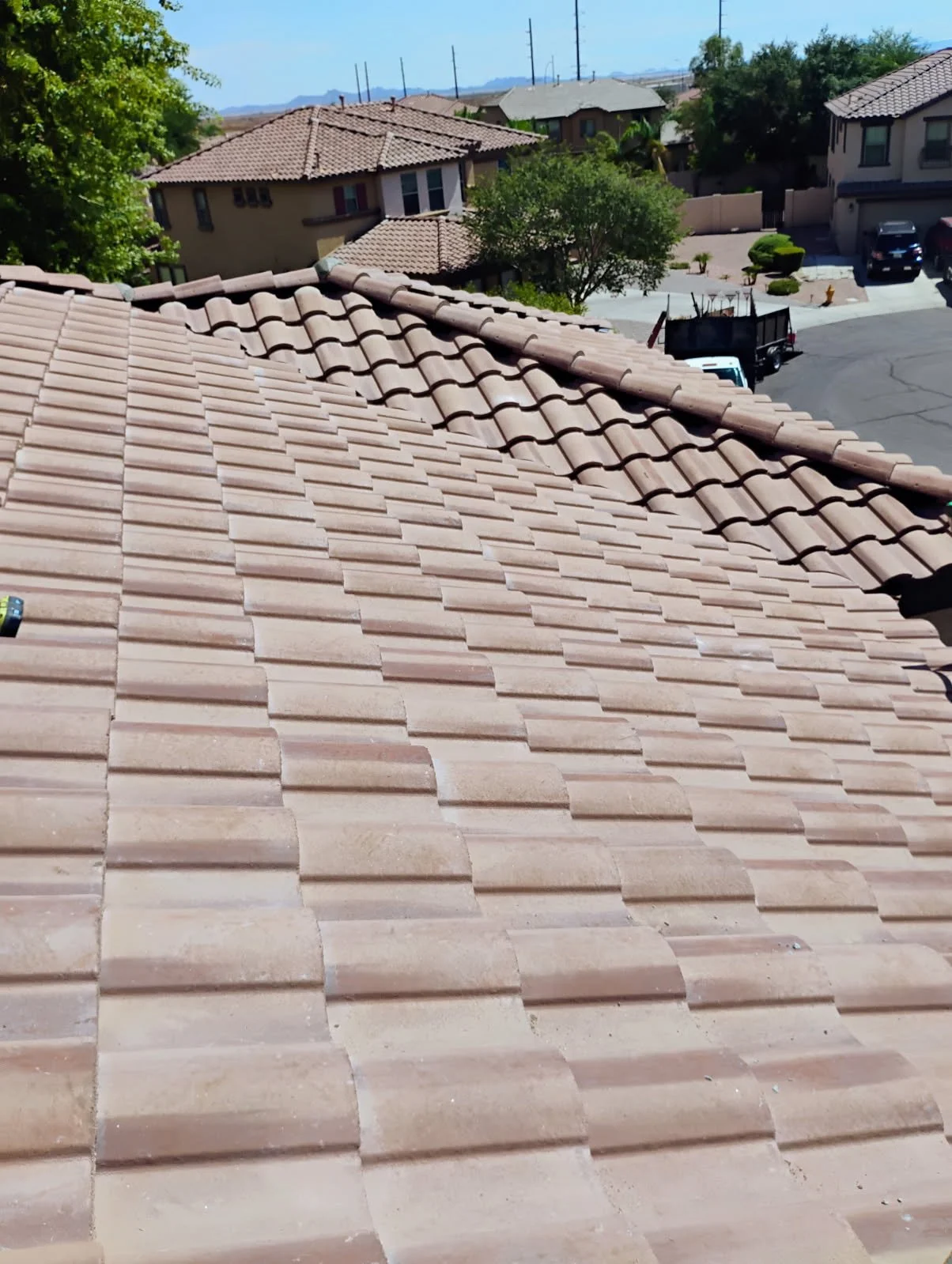
If you've walked out to your driveway in DC Ranch, McCormick Ranch, or anywhere across Scottsdale and looked up at your tile roof, you've probably felt pretty good about what you saw. The tiles are intact. Nothing's cracked. Nothing's slipped. From the ground, it looks like a roof that's got another twenty years left in it easy.
That view is deceiving you, and it's not your fault. It's the tiles' fault, in a way, because they're doing exactly what they were designed to do: last. Concrete and clay tile roofs are built to hold up for 50 years or more. But the tiles were never the part of your roof that was actually keeping the water out. That job belongs to a thin layer you'll never see unless something's already gone wrong: the underlayment.
The Real Villain Is the Heat You Never Feel
Here's the part most homeowners never think about. Your tiles aren't just decoration, they're also acting like a lid on an oven. They block direct sun, sure, but they trap radiant heat underneath them, and in a Scottsdale summer, temperatures beneath the tile surface can climb well past what the ground-level thermometer says. If your home was built somewhere in that late-1990s to mid-2000s window, there's a good chance the underlayment beneath your tiles is standard organic felt paper, the same material builders used across McCormick Ranch, Gainey Ranch, Grayhawk, and Troon during that era.
Felt paper wasn't built for this. After roughly 15 to 20 years of baking under Arizona tile, it dries out, turns brittle, and starts to crumble, almost like dried out cardboard. Some spots you can press a finger into and watch it just fall apart.
Why This Shows Up as a Sudden Leak
This is why the leak always seems to come out of nowhere. It's not that something broke overnight, it's that the underlayment had already been failing quietly for years, and the tiles were still doing a fine job of hiding it. Then a monsoon rolls through, water gets driven under the tile line or pours down a roof valley the way it's supposed to, and instead of hitting a waterproof barrier, it hits crumbling felt with nothing left to stop it. From there it's a straight shot to your plywood decking, and eventually, your ceiling.
If you're seeing a stain, a slipped tile near a valley, or just a general feeling that something's not right after a big storm, it's rarely the tile. It's almost always what's underneath it.
You Don't Need a New Roof. You Need the Right Underlayment.
This is the part that tends to relieve people the most: replacing failed underlayment does not mean replacing your roof. Your tiles are the expensive part, and they're usually still perfectly good.
What we do is called a tile lift-and-reset, sometimes called re-felting. We carefully lift your existing tiles, stack and store them on-site the right way, strip out the old, brittle felt, repair any decking underneath that's taken damage, and install new underlayment built for Arizona heat rather than the standard felt your home came with originally. Then your original tiles go right back on. Same roof you've always had, just with a waterproof layer that's actually built to survive another couple of decades of desert sun underneath it.
Because you're keeping your existing tiles instead of buying an entirely new set, a lift-and-reset typically costs meaningfully less than a full tile replacement, though the exact number always depends on your home's size, roof complexity, and what we find once the old felt comes off. We'll walk you through real numbers for your specific roof once we've actually seen it.
A quick note if your home sits in one of Scottsdale's master-planned communities: many HOAs, including McCormick Ranch, Gainey Ranch, DC Ranch, Grayhawk, and Troon, may require architectural review approval before roofing work begins, which can add some planning time up front. Depending on the scope of your project, city permitting may apply as well. We're used to working within these requirements and can walk you through what that looks like for your specific property.
Why I Actually Enjoy This Part of the Job
I'll be honest, inspecting roofs in these communities is one of my favorite parts of the work. Places like DC Ranch and Troon aren't just job sites to me, I spend plenty of weekends out on those same courses. There's something satisfying about protecting a neighborhood I actually love being in, and about being the person who gets to tell a homeowner their roof is in better shape than they thought, or catch a problem while it's still small and simple to fix.
One Thing for Our Snowbirds
If you split your time between Scottsdale and somewhere cooler for part of the year, here's something worth knowing: your underlayment doesn't take the summer off just because you do. It's up there baking in the heat all season long whether you're home or not, which is exactly why a pre-season inspection matters, especially for a home built in that late-90s to mid-2000s range. We're glad to inspect the roof, document everything we find with photos, and walk you through it over the phone or a video call, no need to fly in for it.
Common Questions About Tile Roof Underlayment
How do I know if my tile roof's underlayment is failing?
In most cases you won't know just by looking from the ground. The tiles can look perfect while the underlayment underneath is already brittle. The only reliable way to know is to have someone physically get up there, lift a few tiles, and check the condition of the felt itself. That's exactly what we do during an inspection.
Do I need to replace my tiles if the underlayment fails?
No. In a tile lift-and-reset, your existing tiles are carefully removed, stored, and reinstalled once the new underlayment is in place. Tiles are the expensive, long-lasting part of the roof and usually don't need to be replaced at all.
How old does a tile roof need to be before I should worry about underlayment?
Homes built in the late 1990s through the mid-2000s are the ones we watch most closely, since standard organic felt paper from that era was not built to handle 15 to 20 years of Arizona heat. If your home falls in that window, it's worth having the underlayment checked even if you haven't seen any signs of a leak.
Will my HOA require approval before this work starts?
Many of Scottsdale's master-planned communities, including McCormick Ranch, Gainey Ranch, DC Ranch, Grayhawk, and Troon, require architectural review approval before roofing work begins. We're familiar with these requirements and can walk you through what applies to your specific property.
I'm not in Scottsdale full time. Can this be handled remotely?
Yes. We regularly inspect roofs for homeowners who split their time elsewhere. We document everything with photos and walk you through the findings over the phone or a video call, so you don't need to be on-site for the inspection itself.
Let's Take a Look at What's Under Your Tile.
If your home falls in that late-90s to mid-2000s window, a straightforward inspection can tell you exactly where your underlayment stands, before a monsoon makes that decision for you.
Book Your Free Inspection