A midnight call, a fallen eucalyptus branch, and what it actually takes to secure a tile roof at Pinnacle Peak Country Club.
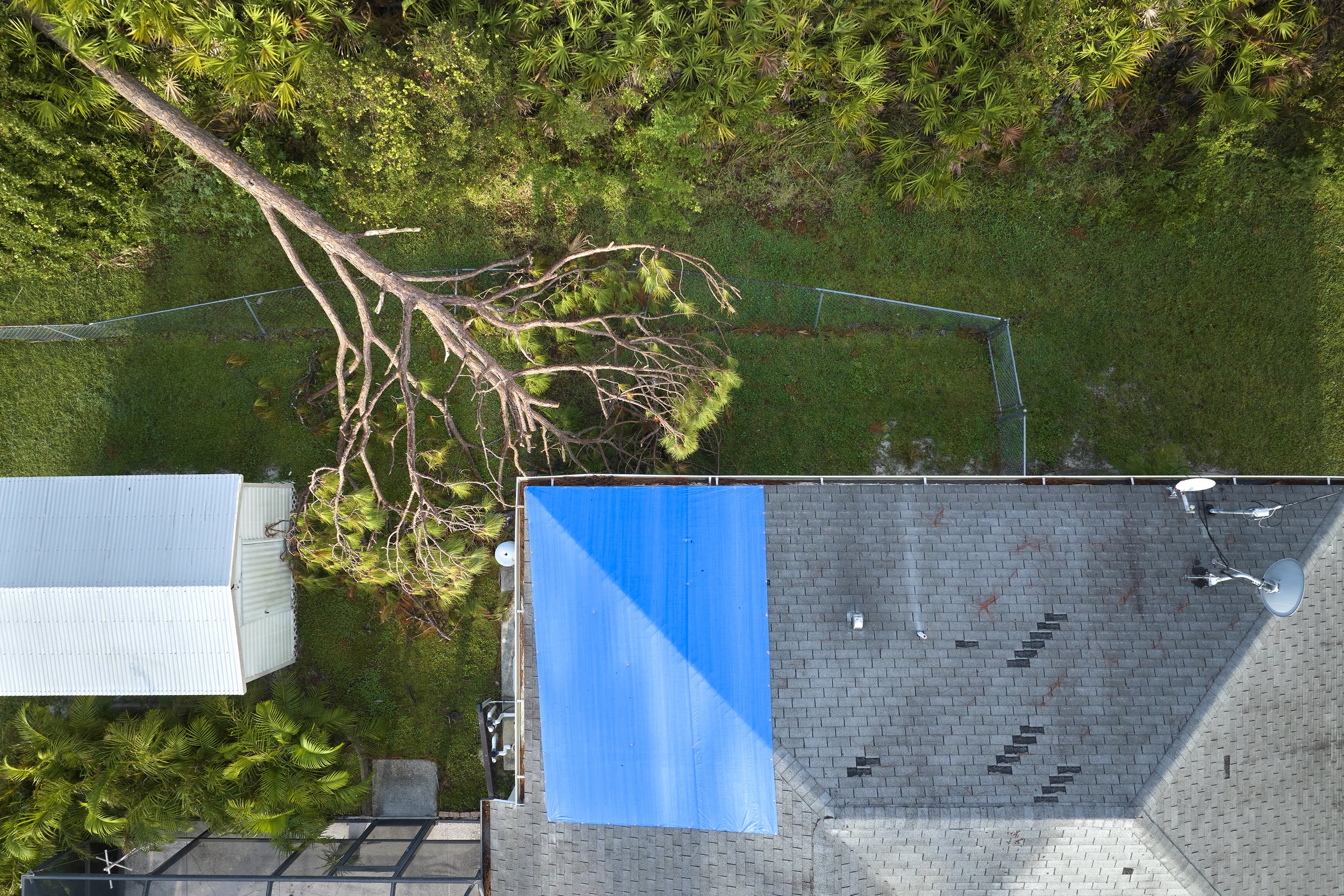
A monsoon can turn a beautiful shade tree into a real problem fast. I got a reminder of that on a call I took late one night from a homeowner in Pinnacle Peak Country Club.
A storm was hammering North Scottsdale that evening, heavy rain, wind, lightning, the whole thing. Out by the McDowell Mountain foothills, storms like that can create sudden bursts of straight-line wind that hit established neighborhoods hard. On this property, the wind took down part of a mature eucalyptus tree, and a heavy branch snapped off and came down straight onto the homeowner's tile roof.
By the time they called me, water was already getting in through cracked tile, and understandably, the family was scared. Nobody wants to hear their roof might be failing in the middle of a storm.
Why We Don't Climb a Roof During a Storm
Here's the thing people don't always expect from a roofer. Even with a family calling me in a panic, I wasn't getting up on a wet, steep tile roof in the pitch dark with lightning still active. That's not caution for the sake of caution, that's just how you avoid turning one emergency into two.
So I stayed on the phone and walked them through what to do inside instead. Move anything valuable out of the path of the water, get containment buckets under the leak, keep an eye on where the water was actually traveling. Meanwhile we got a crew ready to move the second it was safe.
Insurance companies like to see that damage was mitigated quickly. Getting a tarp on a damaged roof as soon as it's safe to do so is exactly the kind of response that works in your favor if you end up filing a claim.
First Light: Getting Eyes on the Damage
The second the storm cleared the next morning, we were out there. Before any tarp goes anywhere, the site has to be handled properly, and that comes down to three things.
Clearing the debris. We carefully cleared the broken branch and cracked tile away from the impacted area so we weren't causing any more damage in the process of just getting to it.
Checking the structure. I inspected the roof deck and the framing underneath to confirm the impact hadn't compromised anything beyond the tile and underlayment. That's not a step you skip, even on a job that looks straightforward.
Finding the actual failure point. Once we knew the structure was sound, we identified exactly where the underlayment had torn open and let water through.
We also took photos of everything before we touched a thing. Broken tile, torn underlayment, the tree debris right where it landed. That's just standard practice on our end. It gives the homeowner a clear record of what happened, which matters if insurance gets involved down the line.
Tarping a Tile Roof the Right Way
A cheap tarp job with some bricks and bungee cords is not going to hold up to another North Valley wind event. It'll shred or lift right off. What we do instead is a mechanical fastening process built specifically for tile roofs, and it comes down to four things we get right every time.
1. The right material. We don't grab a standard blue tarp off a hardware store shelf. We use a heavy-duty, UV-resistant commercial-grade tarp built to handle Arizona's sun and wind without breaking down.
2. The wood-batten framing method. To keep the tarp flat and airtight, we wrap the edges and seams around wooden batten strips, then fasten those strips directly into the roof's structural framing. That's what actually holds it in place through wind, not just weight sitting on top.
3. Protecting the tile that's still intact. Tile roofs take an experienced hand. We place our securement points carefully so the surrounding, undamaged tile isn't affected. Done right, this creates a tight seal that isolates the leak without putting the rest of the roof at risk.
4. Sealing every anchor point. Any spot where we fasten into the roof gets fully sealed and weatherproofed, so the temporary fix doesn't become a new leak of its own.
There's also a sizing detail most homeowners never think about. A tarp that just covers the hole isn't enough. We run it well past the damaged area and overlap it onto solid, undamaged tile on every side. Water doesn't just fall straight down, wind pushes it sideways during a monsoon, so if the tarp stops right at the edge of the break, water finds its way around it anyway. Overlapping onto good tile is what actually keeps the roof dry underneath, not just the hole itself.
That sizing and fastening is also exactly why bricks, sandbags, and bungee cords don't work. Weight sitting on top of a tarp does nothing once wind gets underneath the edges. Once that happens, the whole thing acts like a sail, and either it rips loose or it starts flapping hard enough to crack more tile underneath it. Fastening into the actual roof structure is the only thing that holds against real wind, which is exactly why we don't cut that corner.
This is the same process behind our emergency roof tarping service, and it's built to hold up while you sort out the permanent repair, not just until the next storm.
Getting Back to a Finished Roof
A tarp is a temporary fix, not the end of the job. Once everything was sorted on this one, our team came back, pulled the tarp, repaired the deck, replaced the damaged underlayment, and matched the tile back in so it blends with the rest of the roof. Same crew, start to finish, no juggling different contractors for different parts of the job.
That's how I run every job, licensed under Arizona ROC #361656, the same person on the phone at midnight as the one back on the roof at first light, seeing it through until it's actually done right. My wife Megan and I have dealt with a bad roof leak ourselves, so I don't take it lightly when a family calls scared in the middle of a storm. I know what that feels like from the other side, and it's a big part of why I don't cut corners on a job like this one.
If a storm ever takes a tree branch to your roof, don't wait around watching a small leak turn into something bigger.
Emergency Tree Damage and Roof Tarping: FAQ
How long can a temporary roof tarp actually hold up?
A properly installed commercial tarp, fastened correctly into the roof framing, can hold up for weeks while a permanent repair gets scheduled. It's built to handle real Arizona wind and sun, not just sit there until the next storm tears it off.
How big should an emergency roof tarp be compared to the damage?
Bigger than most people expect. A tarp that only covers the hole itself usually isn't enough, since wind-driven rain during a monsoon moves sideways, not just straight down. We overlap the tarp onto solid, undamaged tile on every side so water can't just find its way around the edges of the break.
Will a roofing company tarping my roof cause a problem with my insurance claim?
No, the opposite. Insurance companies want to see that damage was addressed quickly to prevent it from getting worse. Documenting the damage with photos before doing any work helps give you a clear record of what happened.
Can a tarp damage the rest of my tile roof?
Not if it's done correctly. We're careful about where we place fasteners so the surrounding, undamaged tile isn't affected while the tarp is doing its job.
What should I do if a tree damages my roof during a storm?
Don't get on the roof yourself, especially during active weather. Move valuables away from the leak path inside, contain the water as best you can, and call a roofer once it's safe. Getting a professional tarp on quickly protects the property until permanent repairs can be made.
Storm Damage on Your Roof? Call or Text Jeff Directly.
If a tree or storm has damaged your roof, don't wait for a small leak to become a bigger problem. We'll get out there, secure the property properly, and walk you through what comes next.
Book Your Free InspectionOr call or text us at 480.407.6000