What Happens During a Roof Inspection in Scottsdale? A Homeowner’s Guide
Scottsdale roof inspection
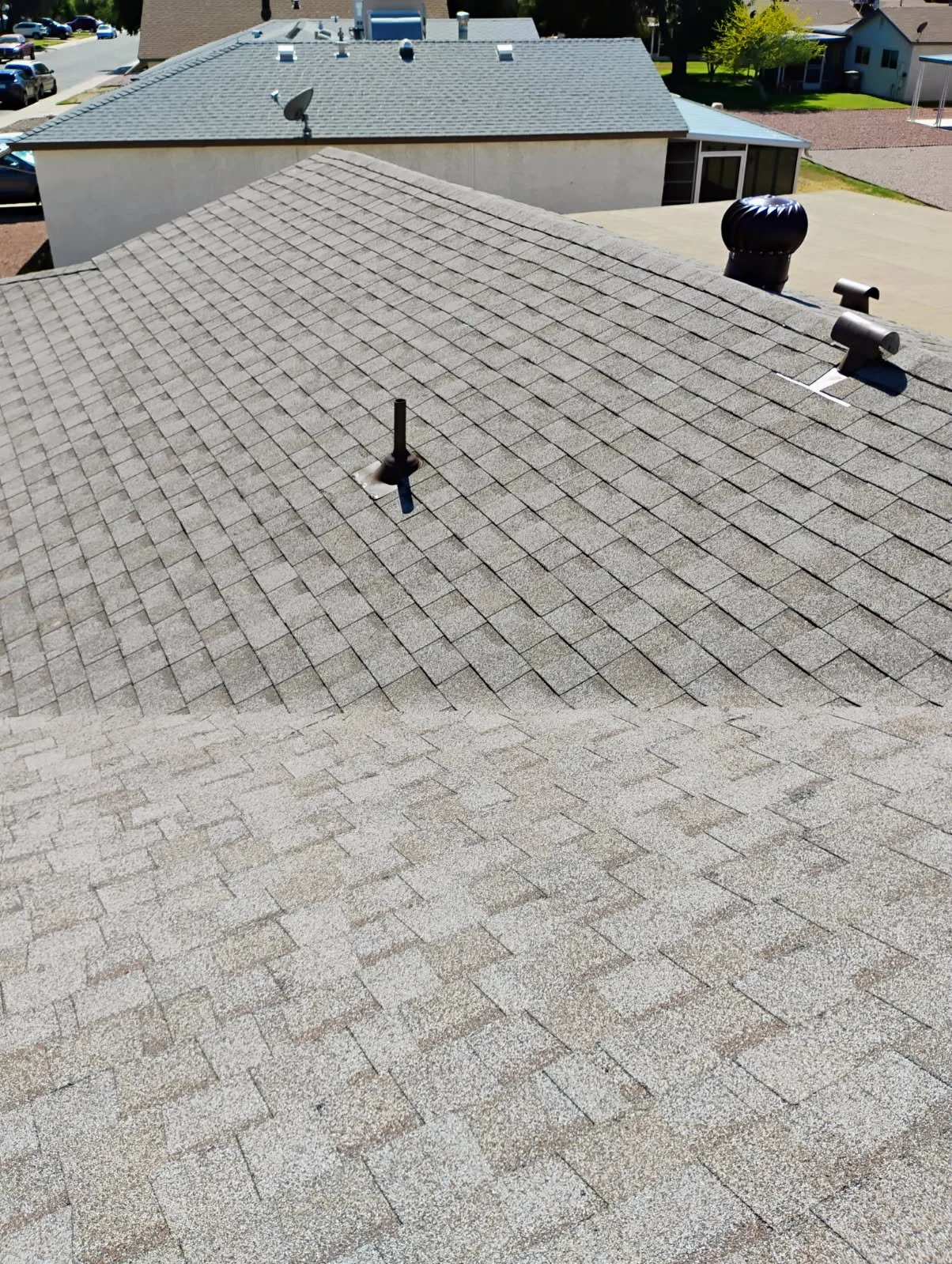
Asphalt shingle roof in Scottsdale showing natural wear from sun exposure, often evaluated during a roof inspection
Many homeowners know that roof inspections are important, but they are not always sure what actually happens during one.
What does a roofing professional look for?
How long does it take?
And how does an inspection help protect your home?
Understanding the inspection process can help homeowners feel more confident about their roof and make informed decisions about maintenance, repairs, or replacement.
In Scottsdale and across the Phoenix Valley, regular roof inspections can be especially valuable because Arizona roofs face extreme heat, intense UV exposure, and seasonal monsoon storms.
If you’ve been thinking about scheduling a roof inspection in Scottsdale, understanding what the process looks like can help you feel more confident moving forward.
Why Roof Inspections Matter in Arizona
Roofs in Arizona work hard year-round.
The combination of heat, sun exposure, and wind-driven monsoon storms can gradually wear down roofing materials over time.
A professional roof inspection helps identify issues such as:
cracked or slipped roof tiles
worn underlayment beneath tile roofs
damaged shingles
flashing problems around vents or skylights
small leaks before they cause interior damage
Many of these problems begin as small issues that are easy to repair when caught early.
Step 1: A Visual Assessment of the Roof
A professional inspection usually begins with a careful visual assessment of the roof.
This includes evaluating:
roof tiles or shingles
ridge lines and roof edges
flashing around roof penetrations
vents, skylights, and chimneys
areas that commonly collect debris
In Scottsdale neighborhoods where tile roofs are common, inspectors also look for tiles that may have shifted due to wind or foot traffic.
Even small tile movement can sometimes expose the protective underlayment beneath the tiles.
Step 2: Checking the Roof’s Underlying Protection
While tiles or shingles are the visible part of the roof, the underlayment beneath them is what provides the primary waterproof barrier.
Over time, Arizona heat can cause underlayment materials to dry out or deteriorate.
During an inspection, roofing professionals look for signs that the underlayment may be aging or losing effectiveness.
This is especially important for older tile roofs in Scottsdale and Paradise Valley, where the tiles themselves may still appear in good condition while the underlying materials are beginning to wear.
Step 3: Evaluating Areas Where Leaks Commonly Occur
Certain areas of the roof are more vulnerable to leaks than others.
A roof inspection typically includes a careful review of:
flashing around vents and pipes
roof valleys where water flows downward
areas around chimneys and skylights
transitions between roof sections
These areas are designed to direct water away from the home, but over time they can loosen, crack, or shift.
Identifying these issues early can prevent water from reaching the interior of the home.
Step 4: Looking for Signs of Storm or Heat Damage
Scottsdale roofs can experience sudden stress during monsoon season.
Strong winds, blowing debris, and heavy rain can affect roofing materials in ways that may not be immediately visible from the ground.
During an inspection, roofing professionals look for:
wind-displaced tiles
cracked shingles
debris impact damage
areas where water may have pooled
The intense Arizona sun can also cause gradual material breakdown, especially on older roofs.
Step 5: Explaining the Findings to the Homeowner
One of the most important parts of a roof inspection is communication.
After reviewing the roof, the contractor should clearly explain what was found and what it means for the homeowner.
In many cases, the roof may simply need minor maintenance or small repairs.
Other times, the inspection may reveal that the roof is approaching the end of its service life.
At Mastercraft Expert Roofing, we take the time to walk homeowners through the inspection findings and answer any questions they may have. Many homeowners appreciate being present during the inspection so they can better understand what is happening on their roof.
How Often Should Scottsdale Roofs Be Inspected?
For homes in Scottsdale and the East Valley, roof inspections are often recommended:
after major monsoon storms
when buying or selling a home
if signs of leaks appear inside the home
every few years as part of routine home maintenance
Regular inspections can help extend the life of the roof and prevent small issues from becoming larger problems.
When a Roof Inspection Provides Peace of Mind
Sometimes the most valuable outcome of a roof inspection is simply reassurance.
Many homeowners discover that their roof is still in good condition and only requires occasional maintenance.
Having a professional evaluation helps remove uncertainty and allows homeowners to plan for future repairs or replacement with confidence.
Related Reading
You may also like:
Roof Repair vs Roof Replacement in Scottsdale: How to Know Which You Need
This content is for general educational purposes only. Always consult a licensed professional for roofing evaluations or repairs.
Need help with your roof?
Mastercraft Expert Roofing offers free inspections and honest answers.
Based in North Scottsdale and serving the East Valley, including Phoenix, Paradise Valley, Mesa, Gilbert, Chandler, Tempe, and Queen Creek.
Call or text Jeff at 480.407.6000 or visit www.mastercraftexpertroofing.com
Roof Inspection FAQs
How long does a roof inspection take?
Most roof inspections take between 30 minutes to an hour, depending on the size and complexity of the roof. Larger homes or tile roofs in Scottsdale may take a bit longer to evaluate thoroughly.
Do I need to be home during the inspection?
It’s not required, but many homeowners find it helpful to be present. This gives you a chance to ask questions and better understand the condition of your roof.
Are roof inspections really free?
Many roofing companies, including Mastercraft Expert Roofing, offer free inspections. The goal is to provide clarity so homeowners can make informed decisions about their roof.
Will the inspection tell me if I need a new roof?
A proper inspection will explain the current condition of your roof and whether repairs or replacement may be needed, now or in the future.
How often should I have my roof inspected in Arizona?
In Scottsdale and the East Valley, it’s a good idea to have your roof inspected every few years, and after major monsoon storms.

About the author
Jeff Robinson is the owner of Mastercraft Expert Roofing, based in North Scottsdale and serving homeowners throughout the valley. As an Arizona native, Jeff has a deep understanding of how the desert climate, intense sun and monsoon storms impact roofs over time.
He built Mastercraft Expert Roofing on one principle: every roof deserves to be completed to an outstanding standard. No shortcuts. No surprises. Just honest assessments and work done right the first time.
As an avid golfer Jeff especially enjoys working with homeowners in Scottsdale's premier golf communities where attention to detail and pride of ownership are simply part of life. He understands exactly what those homes deserve and holds every project to that same standard.
Outside of work Jeff spends time with his family and gets out on the golf course whenever possible.